WebMCP vs AI agents with unrestricted screen access
Agents that simulate human behaviour have full access to everything on your screen. WebMCP could offer a better path with structured, permissioned access.
Currently, websites are designed for humans to click, scroll, and fill out forms. But what happens when AI agents like OpenClaw do that work instead?
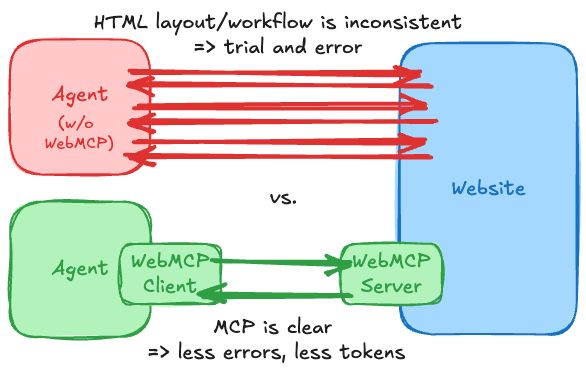
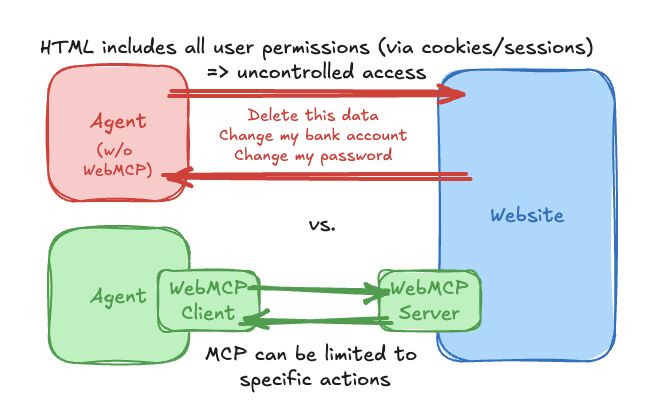
Agents that simulate human behaviour (clicking buttons, filling forms, taking screenshots) have full access to everything on your screen. That's a massive security risk.
WebMCP could offer a better path. Instead of agents pretending to be humans and scraping your data or clicking on the wrong buttons, WebMCP provides structured, permissioned access. Websites expose specific functions. Agents call only what they're authorised to use.
The security difference:
- Traditional agents: unlimited screen access, credential exposure, hope the agent behaves
- WebMCP: explicit permissions, defined boundaries, control what the agent can access
Companies are already blocking OpenClaw over security concerns. The future isn't agents with unrestricted access: it's structured protocols that protect both users and businesses. If WebMCP works out, websites that adopt it will be both more discoverable and more secure.