When do you need to think about security and privacy?
As a startup founder or leadership team, when is a good time to think about security and privacy?
Most founders I know are idea-rich and time-and-money poor. Focus on what matters now; leave the rest for later.
Security and privacy are usually put in the "later" pile. That is a mistake earlier than most people admit.
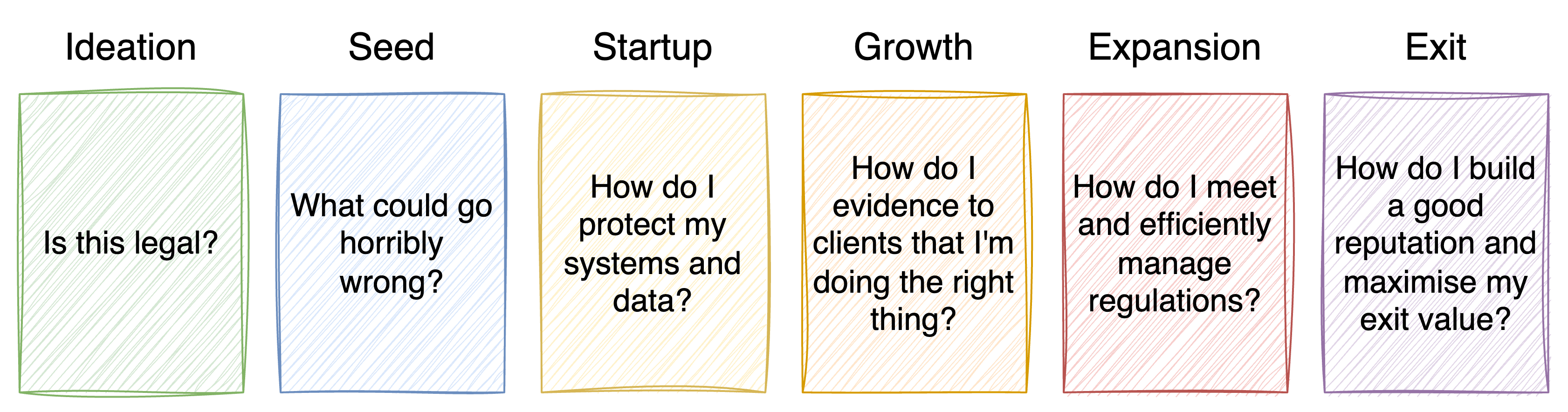
Day one is not too early
Ideation - is this even legal? If the product depends on collecting personal data people never agreed to share, you have a privacy problem before you have a product.
Seed / MVP - what could kill the venture before it starts? You do not need every control live. You do need to know which threats matter and that you could treat them. Building a crypto vault without thinking about long-term crypto strength is an example of painting yourself into a corner.
Startup - people are rushing for the next round. Tech and process are immature. This is when crypto firms get cleaned out by recruiters who are not recruiters - North Korean operators have stolen billions that way. Protect client data. Assume phishing. Review logs. Test backups. Expect the first pentest ask.
Growth - more clients, more data, more staff. Mature buyers ask for ISO/SOC 2 and privacy answers. Mistakes rise when process has not kept up with headcount.
Expansion - new countries, verticals, offices, outsourcing. New regs, new income thresholds, new suppliers. The risk register grows whether you update it or not.
Exit - buyers do not want your skeletons. Reputation and evidence matter in M&A diligence.
So: work at every stage. Not a full security department on day one - but not "we'll hire someone after Series B" either.
Money is not a free pass
Lack of funds is the common thread. It is not an excuse for risks that can wipe the company.
You do not need a full-time CISO on day one. You do need someone in the loop - a few hours a month is enough at first: bounce a design decision, sanity-check a vendor, sketch threats before you build the wrong thing. Grow the engagement as the company grows. That person already knows your context when a client or investor asks hard questions.
I wrote more about models in CISO vs vCISO vs fractional CISO.
Related
- CISO vs vCISO vs Fractional CISO for choosing the right security leadership model
- Security vs. Compliance for why compliance is the floor and security sets priorities